Going Back to Bali
Once again at the airport, weeks of anticipation slide off as the senses come alive. Travel mode engaged. I am instantly more patient, personable, present.
I notice people in a curious way. Where are they going? What lies along their path? It’s not unlike the way I gaze out of my apartment at the Bay and wonder about the people who work on the water, piloting tankers, patrolling the coast, servicing the collapsing docks, or simply fishing for dinner. Their world is uniquely familiar to them, and I am a spectator.
For much of the 1990s, I traveled back and forth through Southeast Asia for my adventure travel career. And as happened with most people who visited, I developed a special connection with the people and culture of the island of Bali. While my territory covered a vast swath of the globe, Bali became a vortex of energy and curiosity for me that kept drawing me back again and again.
The Balinese hold a singular view of the world. While grounded in aspects of Hinduism, they weave a unique amalgam of Buddhist and Animist traditions into their daily lives and practices. It may be the most sustained spiritual culture I’ve ever experienced. Their religion isn’t separate from secular life. It is all one and the same.
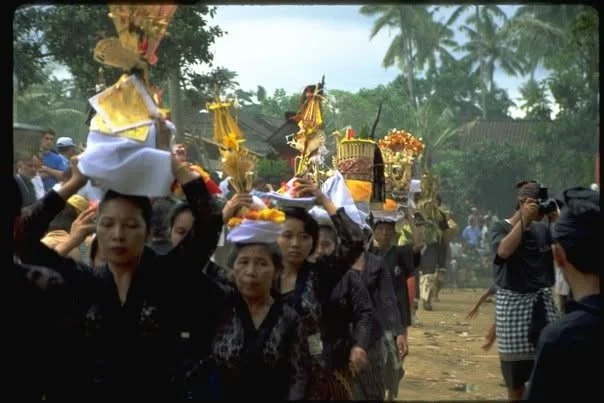
The Balinese live in perpetual awareness of a spiritual realm that guides daily life, involving rituals, festivals, ceremonies, parades, and offerings that are inescapable to anyone paying even the slightest attention. On any given day you may see processions with loud music, elaborate costumery, effigies, and intense purification rituals meant to honor ancestral spirits and balance good and evil forces.
One of the most fascinating elements of Balinese life is that babies do not touch the ground for the first 105 days of their lives. The tradition is meant to keep them pure and protected from evil spirits. Babies are considered sacred, closely linked to the divine realm, and are held or carried until a ceremony called Nyabutan marks their official entrance into the earthly world.
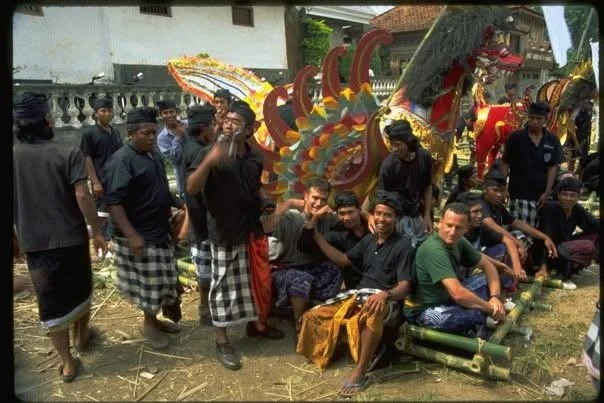
Good and evil play a prominent role in these practices. On one visit, I was invited to attend a funeral ceremony that took place only once or twice a decade. Bodies were preserved in the meantime until they could be transitioned into the spirit realm. Approximately 250 massive funerary pyres were constructed, adorned with elaborate scenes, and carried through the villages toward the funeral grounds.
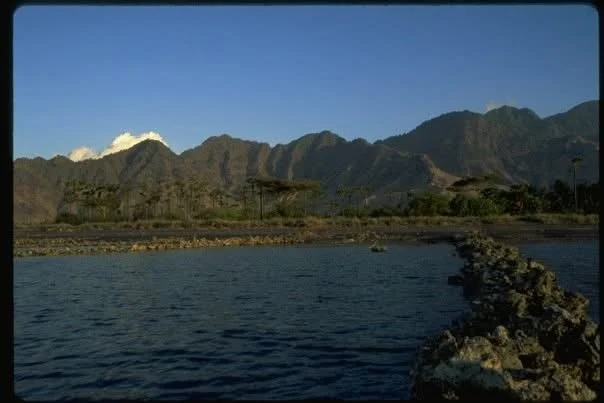
The pyres were intended to confuse evil spirits so they would not follow the dead into the spirit realm. A dozen men carried each tower and ran in staggered, disorienting patterns through the streets to create intentional chaos. Once we arrived at the massive grounds, larger than several football fields, the pyres were set aflame. The towering blaze liberated the souls into ashes. I am told the ashes are later scattered into a river or the sea.
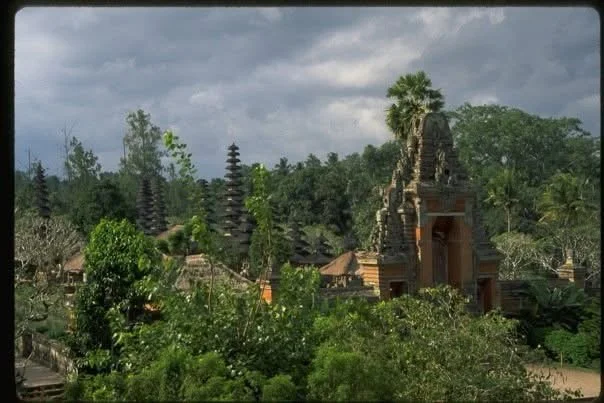
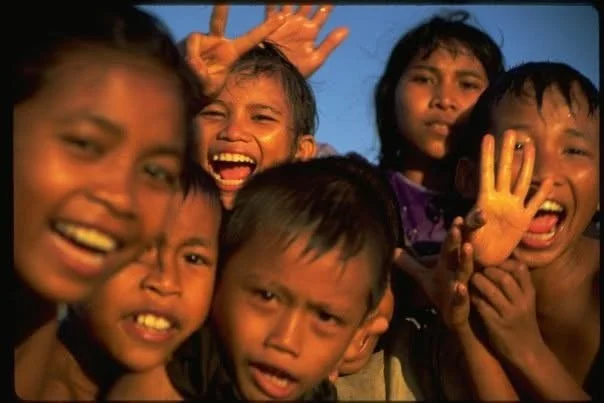
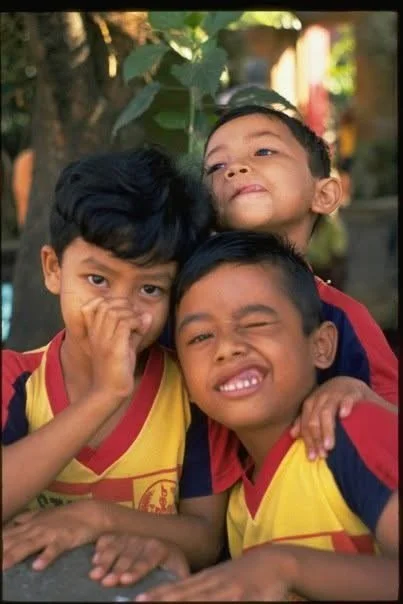
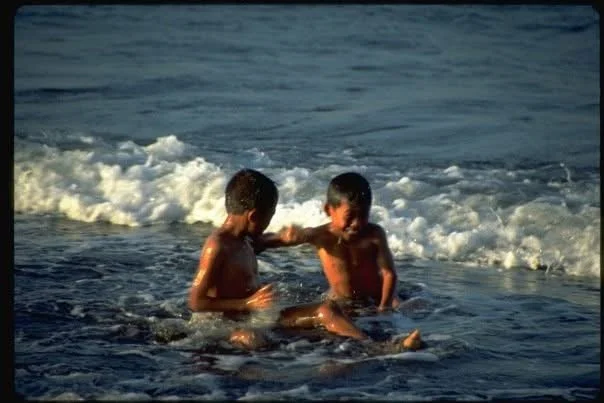
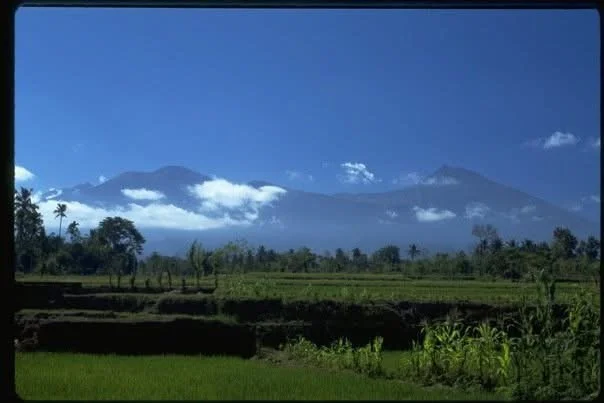
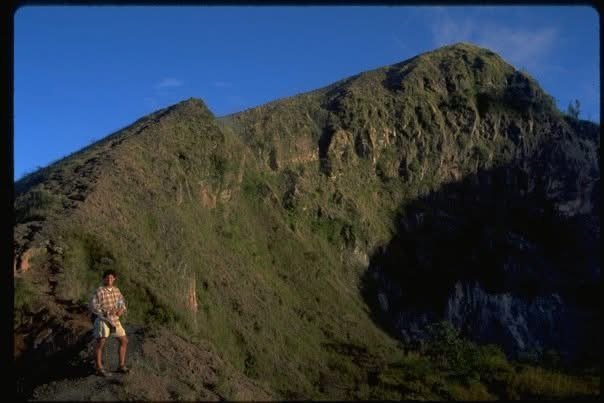
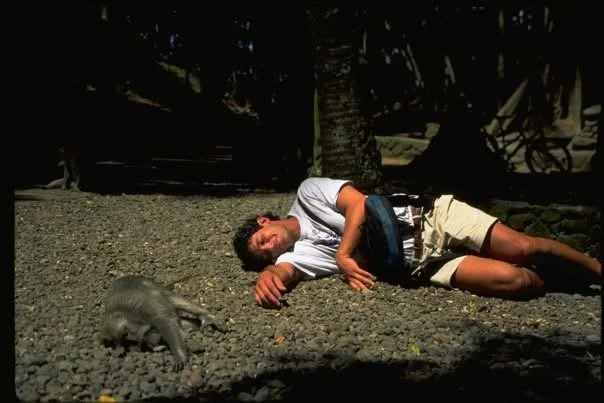
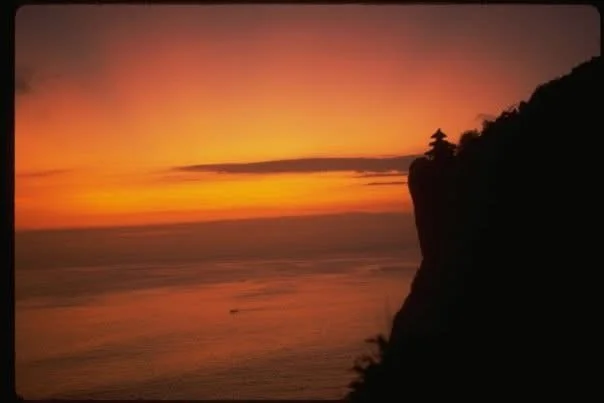
Further deepening my connection to Bali is the fact that nearly every person you meet seems to be a creative soul with remarkable talents. Art is not ornamental there. It is woven into the culture. The Balinese are master wood carvers, painters, musicians, puppeteers, and more. Combined with their religious beliefs, it creates a wildly personable character, and I have rarely felt as welcomed as I did on my many visits to the island.
Yet at the same time, Balinese culture remains equally distant. Despite the desire of many Westerners to learn from and embrace aspects of Balinese life, you simply cannot become Balinese. There are many who live among them and aspire to be like them, but can never truly penetrate the depths of the culture. Respectfully, you are always welcome, but kept at arm’s length.
Bali is not an easy place to reach. From the States, you need to fly first to a nearby hub: Singapore, Hong Kong, Tokyo. That may be one reason I haven’t been back in nearly 30 years. As I sit in the airport preparing for this long, long journey, I’m shocked by that span of time. More than half my life has passed since I last visited this special place.
Truth be told, I am approaching this less as a return than as a completely new experience. Bali was already changing drastically when I last visited. Australian tourists had taken over Kuta Beach and were steadily expanding. Ubud was already becoming the hippie hub. The welcoming and friendly Balinese adjusted and adapted while clinging to their culture just beyond the tourist throngs.
So on this return, everything will feel new to me. My business colleagues, hotels, guides, and restaurants are all faint memories from my travel business days. I will revisit some of the same places, but I can hardly imagine I will recognize much of anything. Rather, I intend to receive it all fresh, as if for the first time.
Most of all, I am eager to return to my reverence for the Balinese people and their culture. I’m arriving on the day of Ogoh-Ogoh, New Year’s Eve, when spirits are invited to revel in dizzying, dramatic parades. The following day is Nyepi, when the entire island goes silent. No planes, no business, no wandering. Everyone stays inside in silence so the evil spirits believe the island is empty and move along. Nothing to see here.
In many ways, this could be the purest form of travel. Break from the past, expectations, preconceptions, opinions and simply experience everything with fresh eyes. Much like my curiosity with airports and the Bay, it seems that life is just simply best lived in the moment - present, curious, receptive, and at times, silent.